Aesthetic Clinic SEO and Website Growth in Hong Kong
Aesthetic clinic SEO in Hong Kong is how a 醫美診所 becomes findable for treatment, concern, device, and district searches without the page reading like canvassing. PRESNSE is a founder-led, specialist studio for Hong Kong private-clinic search growth. We work with aesthetic clinic owners and doctors who want strong visibility on Google, Maps, and AI search while staying inside council advertising limits.
Most marketing advice ignores the wording limits.
In aesthetics, the page that ranks fastest is often the page that gets reported
Beauty marketing wins attention through outcomes, urgency, and before-after drama — for a Hong Kong aesthetic clinic that register is a liability.
So the real problem for an aesthetic clinic is not "how do we get found." It is "how do we get found without handing competitors an opening." That is the page we build.
What aesthetic clinic SEO is here
Aesthetic clinic SEO is the structured work of making your own clinic domain discoverable for the treatments, concerns, devices, and districts patients search, in English and Traditional Chinese, with public wording kept review-conscious.
It is not paid advertising. It is not canvassing. Compliant SEO optimises the clinic's own brand domain so Google, Maps, and AI engines understand it accurately.
That distinction matters. Many doctors read "digital marketing" as forbidden paid promotion and stop there.
The work underneath is more specific, and it can be built within MCHK advertising sensitivity.
Why aesthetic clinic search behaves differently
Aesthetic clinic search in Hong Kong is treatment-specific before it is anything else. Unlike dental, where generic discovery dominates, aesthetic patients search by treatment name.
Treatment-led demand
Patients search Profhilo, Ultherapy, Sculptra, PicoSure, Botox, HIFU, 水光針, 童顏針, 少女針, 超聲刀 — specific device and treatment terms. Each treatment needs its own page when search volume supports it.
English and Traditional Chinese split separately by treatment
English searches (Profhilo 90 vol, Ultherapy 210 vol, Sculptra 110 vol) and Chinese category terms (水光針 260 vol, 童顏針 140 vol, 少女針 140 vol) drive distinct traffic. Direct translation does not capture the buyer intent on either side.
Over-persuasion is a liability
Too many photos, friendly outcome language, or transformation framing can get a page reported. Once a council case opens, intent is no defence.
Stripped-back pages lose ground
Many "SEO optimised" clinic pages get scrutinised, then reduced to barebones. The clinic ends up worse off than before.
Visibility without the canvassing signal
We build a quieter structure, shaped around council advertising constraints rather than legal guarantees.
Define the treatment clearly
So a patient and an answer engine understand the page within the first screen.
Separate education from suitability
Explain a category without implying every reader is a candidate.
Keep wording review-conscious
And MCHK-aware, especially on outcome claims, testimonials, and before-after.
Make evidence structural
Clean architecture and precise facts build more trust than inflated adjectives.
// One point worth saying plainly: in this market, most complaints begin with competitor scrutiny, not patients. We build rankings that do not give competitors an easy complaint angle.
The page architecture for aesthetic clinics
Aesthetic search splits by intent, so each page type carries one job — the detail lives on the child pages.
Treatment pages
For treatment-name searches — answer-ready clarity, no outcome theatre.
Device pages
For device-name searches — no manufacturer claims without confirmed source material.
Concern pages
For patients without the treatment name yet — pigmentation, laxity, hair removal — routed without suitability claims.
Practitioner and location signals
For clean entity relationships — so Google, Maps, and AI read the practice accurately.
Maps comes before the website in Hong Kong
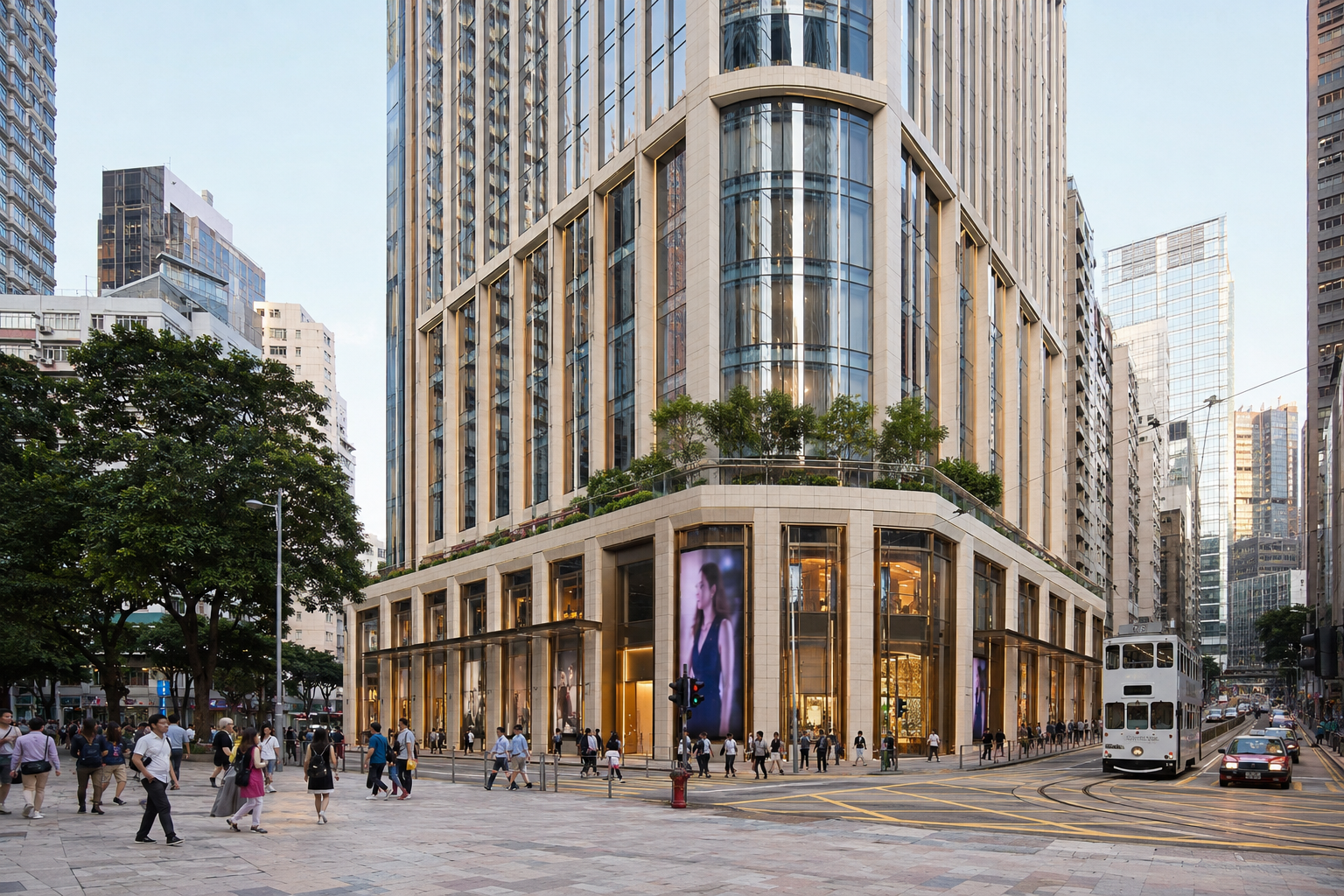 Causeway Bay · 醫美 · 5/F, above the street
On the fifth floor, online visibility is not optional
An aesthetic clinic in a Causeway Bay tower cannot be found on the street. Patients meet it in Maps first — so the profile, reviews, and district signals decide the shortlist before the website is ever opened.
Patients check Maps first, then the Business Profile, then the website. Hong Kong density sharpens it — clinics compete within the same district, the next MTR stop, and even the same building.
Two gaps show up in almost every first audit:
Google Business Profile is under-maintained
Categories, services, photos, and hours that do not match the website.
Review and reputation signals drift
From what the site says, weakening trust before a patient calls.
When several clinics sit equally close to a searcher, the stronger overall SEO profile wins the ranking. Maps visibility and Google Business Profile optimisation carry real weight for clinics inside buildings.
The technical layer most clinic sites are missing
Weak or missing on most
A site can look acceptable to patients and still be hard for Google to find, cite, and serve. Backend technical SEO is the communication layer between the website and search engines — across the 1,200+ clinic websites PRESNSE has reviewed, it is weak or missing on most.
This is where compliant visibility is quietly won or lost.
AI search for clinics →How we build it, and how you can check it
Map demand
Separate treatment, concern, device, district, and Chinese-language searches before the sitemap is decided.
No single overloaded treatment menu.
Build the page system
Each important treatment or device gets the right page type.
No thin pages, no keyword-swap duplication.
Review the wording risk
Content is checked for promotional overreach, unsupported outcomes, and phrasing that reads as canvassing
under MCHK awareness.
Align Maps and local signals
Google Business Profile category, location, services, and photos reinforce the website
instead of contradicting it.
Make facts extractable
Definitions, answer blocks, schema, and contextual links
so the clinic's own site is the clearest source for Google and AI engines.
// No published client names, invented patient volumes, or ranking certainty — aesthetic clinics value discretion, and we operate low-profile by design. How we build aesthetic clinic visibility →
Frequently asked questions
Plain answers on whether SEO is canvassing, how MCHK sensitivity shapes content, why pages get reported, whether Maps matters more than the site, and the bilingual split.